Water damage restoration · Atlanta, GA
Water in the house? Here is what to do in the next hour.
Plain answers on water removal, drying and repair for Atlanta homes, from intown bungalows to slab-on-grade ranches. When you are ready, our line connects you with a restoration company that serves your ZIP code.
Calls are answered by an independent restoration provider, not by this website.
The first hour
Do these in order if it is safe to do so.
- Stop the water
Close the main shutoff valve. In most Atlanta homes it is near the water meter or where the line enters the house.
- Cut power to wet rooms
Switch off breakers for flooded areas. If you would have to stand in water to reach the panel, leave it and call the power company.
- Take photos before you move anything
Wide shots of each room, close-ups of the source, and the water line on walls. Your insurer will ask for them.
- Call for extraction and drying
Standing water and wet drywall need commercial equipment. A restoration company can measure moisture and set up drying the same day.
Water damage services, explained one at a time
Each page covers what the work involves, what happens on day one through day five, and what to ask before you sign anything.
Water damage restoration
The full job, start to finish: stopping the source, removing water, drying the structure, and rebuilding what had to come out.
Read the restoration guide →Water mitigation
Limiting the damage in the first 24 to 72 hours.
Water removal and extraction
Pumps, truck mounts and portable extractors.
Water damage cleanup
Category 1, 2 and 3 water and what each means.
Emergency water damage
Nights, weekends and active leaks.
Flood damage restoration
Storm water, creek flooding and groundwater.
Structural drying
Drying studs, subfloors and framing in place.
Water damage repair
Drywall, flooring, cabinets and trim after drying.
Flooded basement cleanup
Sump pumps, pipes and water from outside.
Sewage cleanup
Backups, overflows and what has to be thrown out.
Mold after water damage
Georgia has no enforceable standards for mold inspection, testing or remediation, so knowing what to ask matters.
Removal, mitigation and restoration are not the same job
Estimates and insurance paperwork often list them separately. Knowing which is which helps you read what you are signing.
Water removal
Getting standing water out of the house.
- Typical work
- Submersible pumps, truck-mounted and portable extractors, carpet and pad extraction.
- You will see
- Hoses, wet vacs, carpet pulled back.
Mitigation
Keeping the damage from spreading.
- Typical work
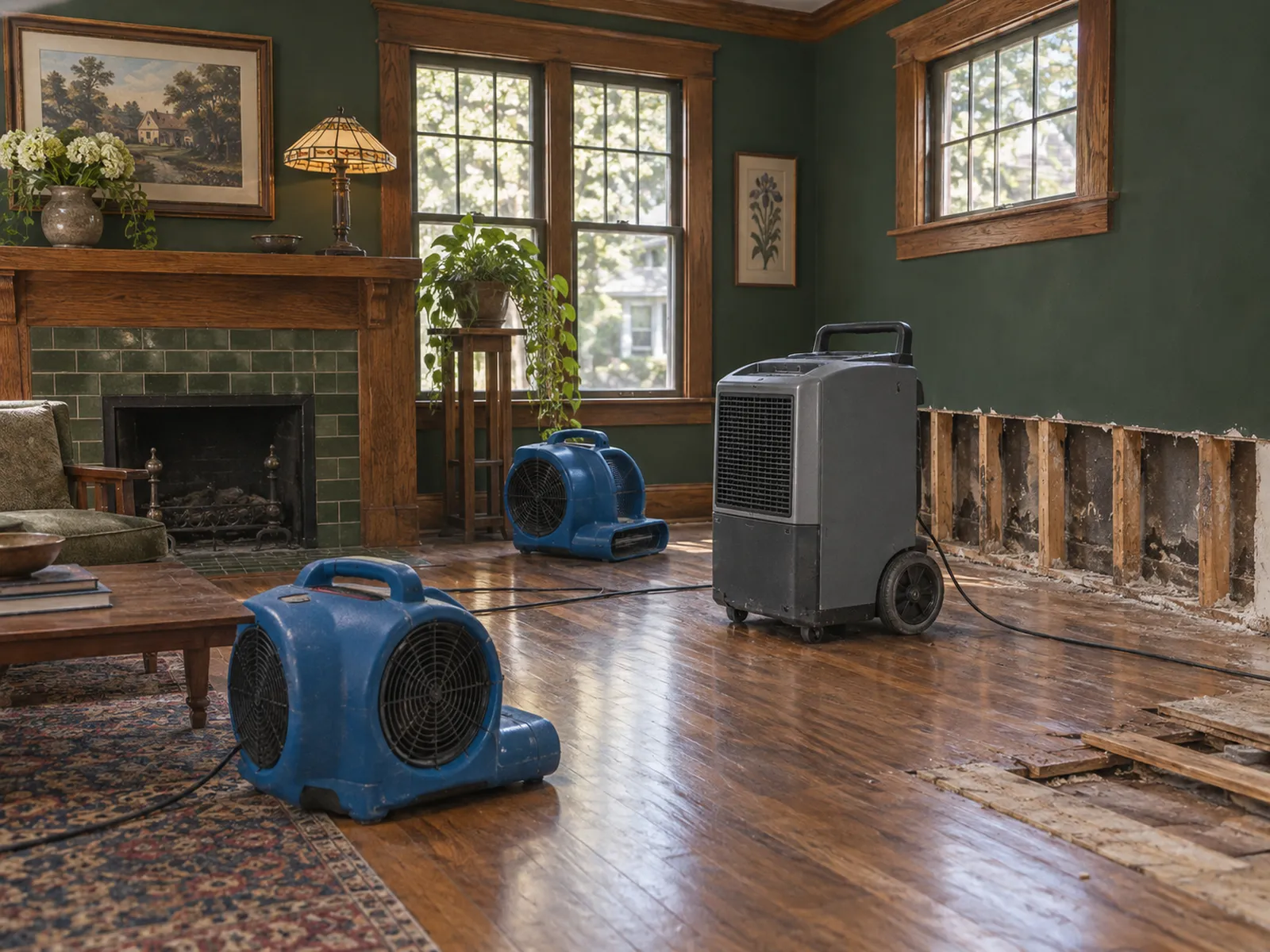
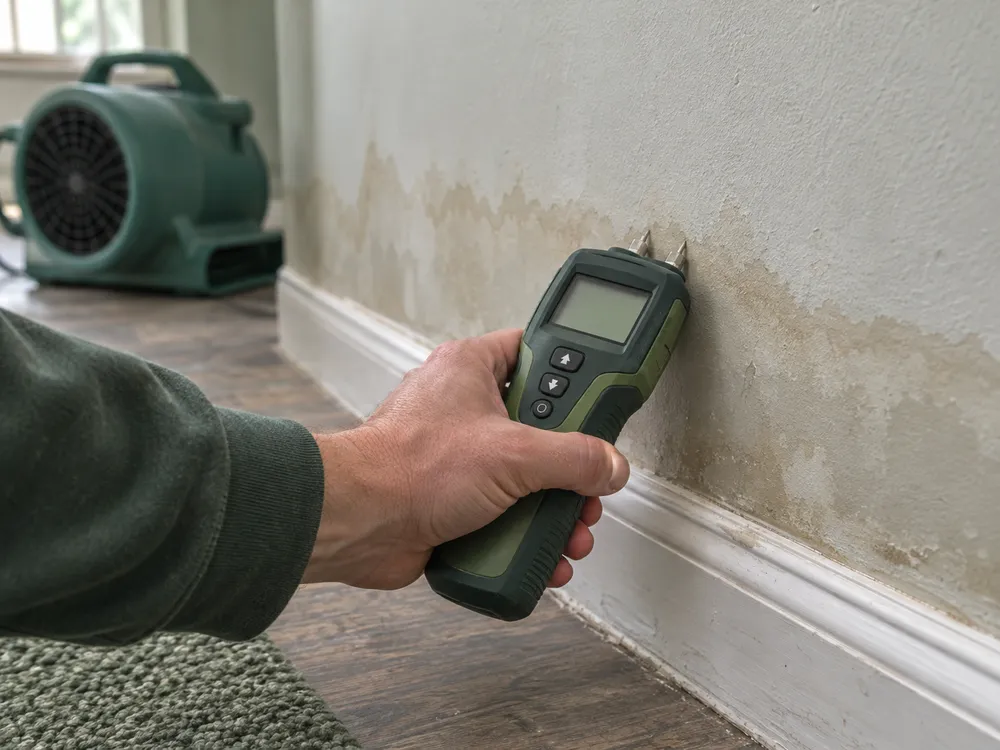
- Moisture readings, removing wet drywall and pad, air movers, dehumidifiers, daily monitoring.
- You will see
- Flood cuts on walls and equipment running around the clock.
Restoration
Putting the house back together.
- Typical work
- New drywall, paint, flooring, baseboards and cabinets.
- You will see
- A rebuild estimate, sometimes from a different contractor.
Who to call besides a restoration company
If the water came from outside your home, or from the city side of the meter, these are the numbers to have.
- City of Atlanta water customersWater leaks and possible main breaks. ATL311 takes these 24 hours a day. Dial 311 inside the city.404-546-0311
- DeKalb County Watershed ManagementWater and sewer emergencies in DeKalb County. 24-hour emergency line.770-270-6243
- DeKalb Watershed billingBilling questions only.404-378-4475
- Your insurance companyReport the claim early. The number is on your declarations page.On your policy
Numbers from ATL311 and DeKalb County Watershed Management.
Find your problem
Specific guides for the leaks and rooms Atlanta homeowners ask about most.
Water still coming in?
Shut off the main, then call. The line is open 24 hours a day.