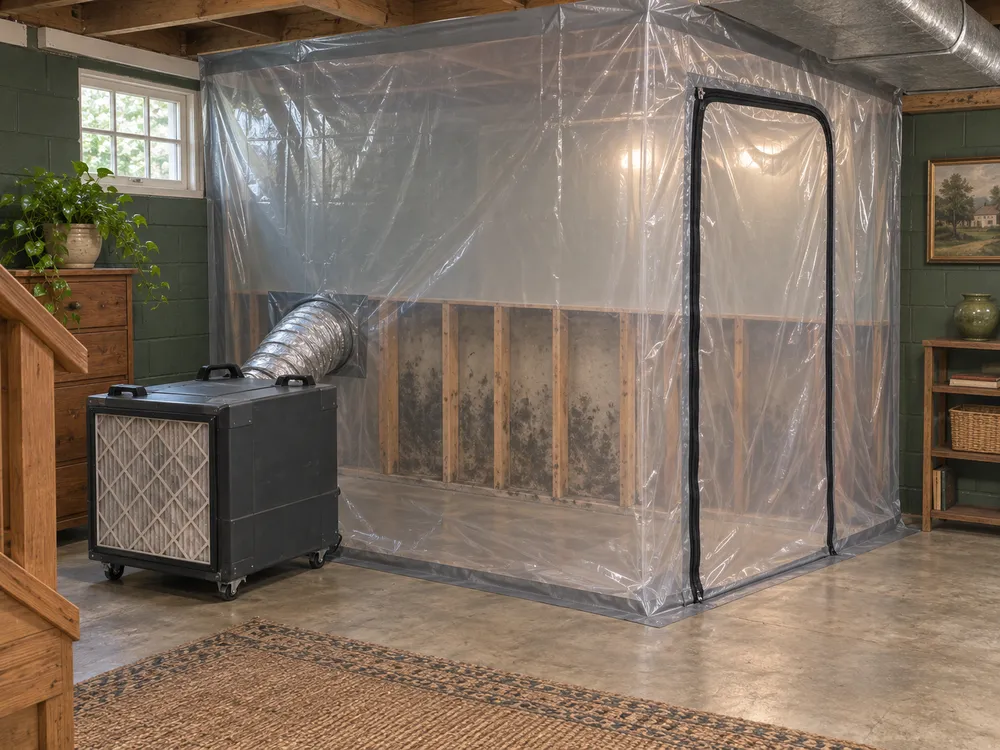
What is mold remediation?
Mold remediation is cleaning up or removing mold growth and correcting the moisture problem that caused it. Appropriate remediation includes drying or removing wet materials, fixing the water entry and using proper containment, according to CDC NIOSH. The industry standard is ANSI/IICRC S520 (IICRC).
What is the difference between mold removal and mold remediation?
The terms are often used the same way. When they are used differently, removal means cleaning off visible mold, while remediation also covers containment, removing moldy materials that cannot be cleaned, and fixing the moisture so it does not come back. Ask the company which one its estimate covers.
Can I clean up mold myself?
Mold on hard surfaces can usually be removed with soap and water, a commercial cleaner or a diluted bleach solution. Never mix bleach with ammonia or other cleaners. Moldy drywall, insulation and carpet usually have to be removed and replaced (CDC).
Does Georgia license mold remediation companies?
No. Georgia's Department of Public Health says mold inspections, testing and remediation have no enforceable state or federal standards (Georgia DPH). UGA Extension notes there are no licensing requirements for mold professionals in Georgia (UGA Extension).
That puts the checking on you. If the job includes rebuilding walls or floors, Georgia's contractor licensing rules still apply to that part of the work.
What happens during professional remediation?
A typical job follows the same steps: find and fix the moisture, set up containment, remove or clean moldy materials, clean the area, dry it, and confirm the work before rebuilding.
- Find the moistureA leak, condensation, a wet crawl space or past water damage. Without fixing it, mold comes back.
- Contain the areaPlastic sheeting and an air scrubber keep spores from spreading to the rest of the house.
- Remove and cleanMoldy drywall, insulation and carpet are removed. Hard surfaces are cleaned.
- Dry and verifyThe area is dried and checked before any walls are closed up.
What should I ask a mold remediation company?
- What is causing the moisture, and who is fixing it?
- How will you contain the work area?
- What materials are you removing, and what will you clean?
- How will you confirm the job is done before the walls are closed?
- Do you follow the IICRC S520 standard?
- Can I see your certificate of insurance?
Common questions
Does the type of mold matter?
Not for cleanup. The CDC says it is not necessary to determine what type of mold you have, and all molds should be treated the same with respect to removal (CDC).
Can I paint over mold?
No. Painting over moldy surfaces is inappropriate remediation and can cause further problems (CDC NIOSH).
How fast can mold grow after a leak?
The EPA says to dry water-damaged areas within 24 to 48 hours to prevent mold growth (EPA).
Related guides
Sources
- CDC NIOSH: mold testing and remediation
- CDC: Facts about Stachybotrys chartarum
- EPA: A Brief Guide to Mold, Moisture and Your Home
- Georgia DPH: indoor air quality
- UGA Extension: mold
- IICRC: current standards
Last reviewed November 13, 2026. This guide is general information, not legal, insurance or medical advice.